
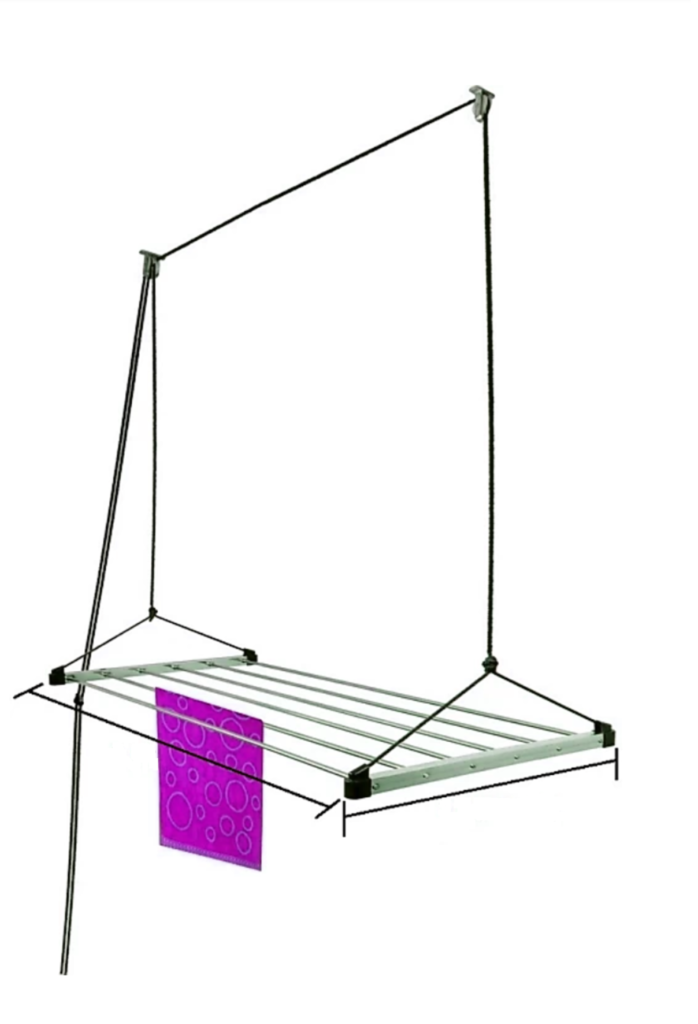
There’s a specific kind of frustration that comes with a tiny balcony and a bulky drying rack fighting for the same square footage. A wall mounted cloth dryer stand solves this in the most direct way possible — it takes the entire drying setup off the floor and onto a wall you weren’t using anyway.
If your balcony, utility area, or terrace is too small for a standing rack, here’s what to know before choosing one.
How a Wall-Mounted Stand Works
Instead of standing on legs, a wall-mounted cloth dryer stand is fixed to the wall with brackets, and the drying arms or wings fold outward from that fixed point when in use. When you’re done, the arms fold back flat against the wall, leaving your floor completely clear.
This is the key difference from a foldable floor stand: a wall-mounted unit stays permanently installed, so it’s better suited to a fixed drying spot you’ll use regularly, rather than one you need to move around the house.
Why Choose Wall-Mounted Over Floor-Standing
- Zero floor space when folded — genuinely useful for narrow balconies where every square foot counts.
- Keeps the floor clear for other use — handy if the balcony doubles as a sitting or storage area.
- No risk of tipping — because it’s fixed to the wall, there’s no wobble or tip-over risk even with a heavy, wet load, unlike some floor stands.
- Consistent drying spot — always in the same place, which is convenient if it’s near a water source or gets the best sun exposure on your balcony.
The trade-off is that it’s less flexible — once installed, it stays in that spot, so it’s worth choosing the location carefully before drilling.

Installation Considerations
Wall Type
Wall-mounted stands need a solid wall — concrete or brick works best. Hollow partition walls or weak plaster may not securely hold the brackets under a loaded stand’s weight, so it’s worth checking your wall type before buying.
Load-Bearing Capacity of the Brackets
Wet laundry is heavy, and a fully loaded stand puts real pulling force on the wall brackets. Look for stands with a stated maximum load capacity, and make sure the brackets themselves — not just the arms — are rated for that weight.
Professional Installation
Because the stand is only as strong as its wall fixing, it’s worth having it installed by someone experienced with drilling into your specific wall type, rather than treating it as a quick DIY job, especially for heavier stainless steel models.
Height Placement
Mount it at a height where you can comfortably reach the top rods without stretching, but high enough that longer garments won’t drag on the floor once hung. A common mistake is mounting it too high for comfortable daily use.
What to Look For When Buying
Arm/Wing Count and Extended Reach
More arms generally mean more drying capacity, but also a bigger reach when extended — measure your balcony width to make sure the fully opened stand won’t block a doorway or walkway.
Weight Capacity
Check the manufacturer’s stated load capacity and be realistic about your typical laundry load, especially for heavier items like towels, jeans, or bedsheets.
Rust-Proof Coating
Since wall-mounted stands are almost always installed outdoors or in humid utility areas and left there permanently, rust resistance matters even more than with foldable stands that get stored indoors. Stainless steel or a genuinely weatherproof coating is worth prioritising over painted finishes.
Ease of Folding
Test (or check reviews for) how smoothly the arms fold in and out — stiff or difficult folding mechanisms become a daily annoyance fast.
Bracket and Hardware Quality
The screws, brackets, and wall plugs matter as much as the stand itself. Cheap hardware is often the actual point of failure, not the drying frame.
Ideal Spots for a Wall-Mounted Stand
- Balcony side walls — the most common placement, maximising floor space for movement or seating.
- Utility room walls — near the washing machine, so laundry moves straight from wash to dry.
- Terrace walls — good for households that dry larger loads and want a fixed, high-capacity spot.
- Narrow service balconies — where a floor stand genuinely wouldn’t fit but a wall has spare space.
Maintenance and Safety Tips
- Check the wall brackets periodically for any looseness, especially in the first few months after installation.
- Wipe down the arms and joints regularly since they’re exposed to weather more consistently than indoor stands.
- Avoid exceeding the stated load capacity even briefly — repeated overloading is the most common cause of bracket failure over time.
- Fold the arms back fully after use rather than leaving them half-extended, which puts uneven strain on the hinge points.
Is a Wall-Mounted Stand Right for You?
If your priority is reclaiming floor space in a small balcony or utility area — and you have a solid wall to install it on — a wall-mounted cloth dryer stand is usually the most space-efficient option available. It does ask for a one-time installation effort in exchange for a permanently clear floor, which for most small-space homes is a trade worth making.
VIMART’s wall-mounted cloth dryer stands use a retractable arm design — extend for laundry, fold flat against the wall afterward — built in rust-resistant stainless steel to handle Ahmedabad’s humid, monsoon-heavy conditions. As a direct manufacturer, we also handle installation and after-sales repair across Ahmedabad and Gujarat, which matters for a product where the wall fixing is doing the real work. Get a quote for your balcony or utility space.
Hi, this is a comment.
To get started with moderating, editing, and deleting comments, please visit the Comments screen in the dashboard.
Commenter avatars come from Gravatar.